



You tap “Buy Now” on a bag of artisan coffee beans at midnight. By nine the next morning, tracking shows your package is already on a delivery truck. Have you ever wondered what happens during those nine hours while you sleep? According to consumer research, this instant shift from “I want this” to “it’s on its way” is exactly what keeps modern shoppers coming back. Best way to find the dropshipping order management.
Meeting that lightning-fast expectation is virtually impossible if a business owner is copying shipping addresses by hand. Industry data reveals that instant processing drastically reduces order cancellations because buyers simply never have time to second-guess their purchase. Businesses achieve this speed using automated ecommerce order processing—the “Invisible Engine” working behind the scenes. This technology acts as a digital assistant that handles the paperwork, easily streamlining high-volume sales channels so shops can grow without burning out.
The fulfillment cycle consists of four major stages: receiving the order, updating inventory, generating labels, and shipping to the customer. Seeing these physical steps mirrored digitally reveals exactly why speed is your brand’s best marketing tool.
The ‘Manual Trap’: Why Writing Shipping Labels by Hand Stalls Your Growth
Imagine writing 100 shipping labels by hand every single day. While typing customer addresses is easy when your coffee bean shop first opens, every growing business eventually hits “The Break Point”—the exact moment where doing things manually stops being profitable and starts stalling growth. This bottleneck severely slows down your Order-to-Cash cycle, which is simply the total time it takes from a buyer clicking “purchase” to that money sitting securely in your bank account.
Relying on human typing introduces expensive mistakes that chip away at your profits. Consider the true cost of these three common slip-ups when you aren’t reducing manual data entry errors:
- Typos in addresses: A single wrong number means a lost package, a costly replacement, and a frustrated buyer.
- Wrong SKU selection: Picking the wrong item requires paying for return shipping and destroys customer trust.
- Missed tracking emails: Forgetting to send shipping updates leads to anxious customers flooding your inbox.
Beyond frustrating your buyers, sluggish fulfillment can actually hide your products from future shoppers. Marketplaces like Etsy track how fast you ship, meaning manual delays will eventually drop your store’s search ranking. Improving order-to-cash cycle efficiency requires a digital assistant that handles the paperwork directly.
What Exactly Is ‘Automated Order Processing’?
At its core, automated order processing is the “invisible engine” that replaces physical paperwork with instant digital communication. Instead of a human reading a printed receipt and typing customer details into a shipping website, software handles the entire journey behind the scenes.
This invisible engine operates using a simple framework called “Triggers and Actions.” Think of a trigger as the starting gun—like a shopper buying a bag of espresso beans—and the action as the immediate result, such as your system automatically generating a shipping label.
Relying on this logic means your ecommerce order management system acts just like a flawless employee who never sleeps, takes a lunch break, or makes a typo. Whether a purchase happens at noon or three in the morning, the workflow continues perfectly without you needing to click a single button.
For these different programs to talk to one another, they perform a “digital handshake”—a secure, instantaneous data exchange between your storefront and your shipping tools. This vital connection begins the moment a customer pays for an item, initiating a secure data capture process.
Step 1: The Digital Handshake—Capturing Orders Instantly
Imagine a customer buys a bag of espresso beans from your website, but your separate shipping software never gets the memo. To prevent these frustrating “ghost orders” that vanish between systems, your storefront relies on a digital bridge called an API, or Application Programming Interface. Think of an API as a universal translator at the United Nations, instantly carrying the buyer’s exact shipping details from your shop directly into your management tools so nothing gets lost in translation.
Capturing these details instantly is crucial, which is why modern businesses use real-time capture instead of older “batch syncing” methods. In the past, software might only check for new purchases once every few hours, meaning a shopper could pay for an item that actually sold out twenty minutes ago. Real-time capture works like a live security feed, updating your dashboards the exact second a credit card is approved.
Building your storefront with API-first ecommerce backend solutions guarantees this instantaneous communication never breaks down under pressure. When your automated order processing foundation is designed to seamlessly talk to other software from day one, you completely eliminate the manual data entry that causes typos and delayed shipments. Your digital assistant catches the purchase details perfectly every single time, keeping your buyers thrilled with lightning-fast updates.
Once that digital handshake successfully passes the baton, the system still needs to make sure the requested delivery address is real and the items are actually sitting on a warehouse shelf, initiating the crucial process of validating orders without human intervention.
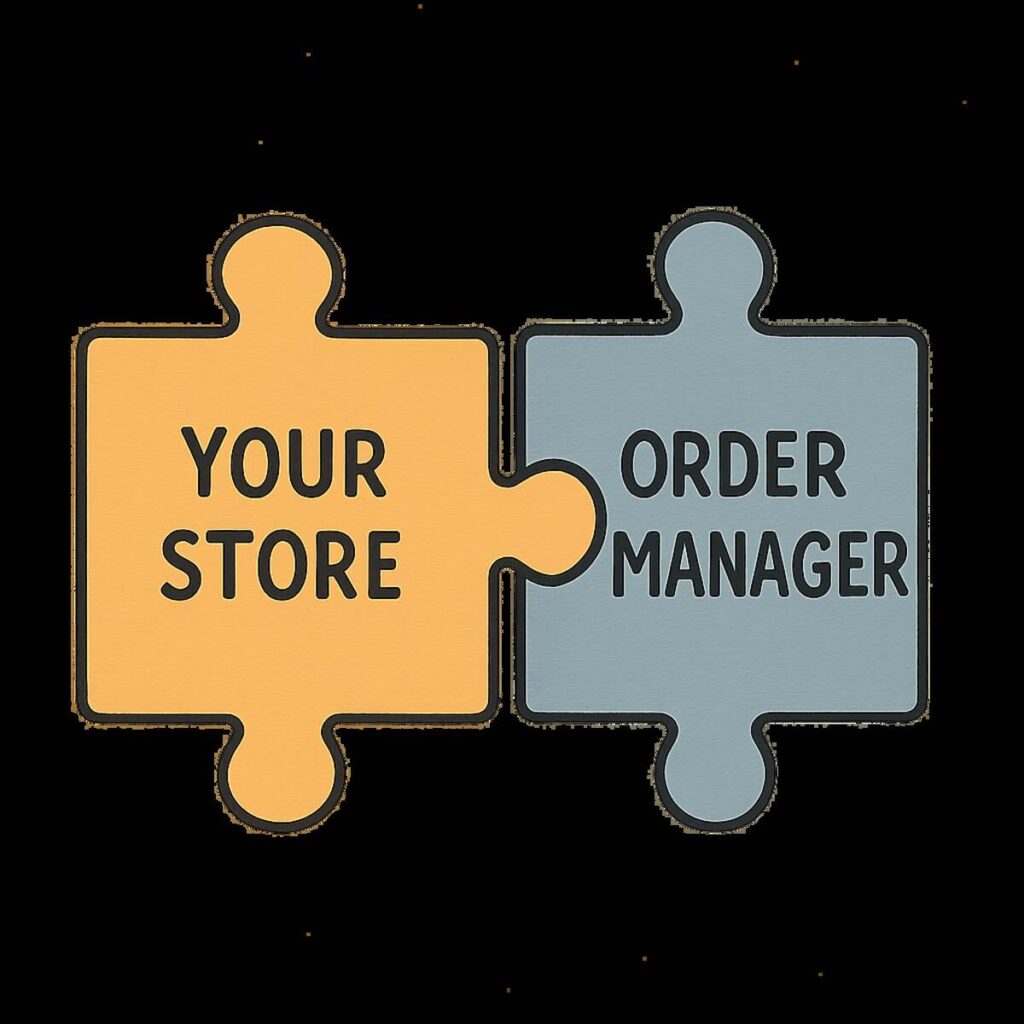
Step 2: The Logic Gate—Validating Orders Without Human Eyes
Before automation, business owners manually reviewed every purchase to ensure customers didn’t type fake zip codes or buy sold-out items. Today, automated order processing replaces that tedious review using a “logic gate.” Think of a logic gate as a digital bouncer standing at your shipping department’s door, relying on strict “if this, then that” logic to ensure only flawless purchases make it through to the warehouse.
To filter out problem orders without human eyes, your order fulfillment automation software relies on these logic gates to enforce validation rules. When a digital handshake delivers a new purchase, the system instantly runs a four-point checklist:
- Address validity: Does this street and zip code actually exist?
- Payment status: Did the credit card transaction clear completely?
- Inventory availability: Is this specific product actually sitting on the shelf?
- Fraud risk: Is this an unusually large or suspicious order?
Setting up these rules drastically reduces the hours spent on manual customer service outreach, like emailing buyers to fix missing apartment numbers. Instead of discovering an out-of-stock nightmare days later, the system catches issues instantly. Once a legitimate order successfully passes these checks, the software must immediately update your storefront so another customer doesn’t buy the same item.
Inventory Syncing: The ‘Mirror Effect’ Across Multiple Channels
Picture listing your best-selling coffee mugs on Amazon, Etsy, and your Shopify store simultaneously. If a shopper buys your last blue mug on Etsy, how do the other sites know it is gone? Without connected platforms, business owners frantically update numbers by hand to avoid accidentally selling the same item twice.
The secret to safely scaling without these errors is centralized inventory, a single digital master list that controls the stock numbers for every place you sell. Instead of treating each storefront as an isolated island, this system acts like a mirror. When that mug sells on Etsy, the software instantly updates the reflection on Amazon and Shopify to zero.
Relying on automated inventory management to run this mirror strategy behind the scenes completely transforms your daily operations. This setup provides three critical advantages:
- No more ‘Out of Stock’ emails forcing you to apologize and issue refunds to disappointed buyers.
- Accurate inventory levels across the web, which prevents account suspensions on strict platforms like Amazon.
- Higher marketplace rankings, because retail algorithms actively reward sellers who fulfill orders without cancellations.
Perfecting inventory syncing across multiple channels ensures your virtual shelves are always reliable, but handling these rapid updates requires the right underlying software. Determining the right system requires evaluating your specific operational scale.
OMS vs. ERP: Which ‘Brain’ Does Your Business Need?
Imagine fixing a delicate watch with a giant Swiss Army knife when all you actually need is a precision screwdriver. Choosing software to manage your sales works similarly. When your business grows, you need a digital “brain” to coordinate shipments, but buying the biggest tool available often wastes money.
An Order Management System (OMS) is your precision screwdriver. This specialized order processing software focuses purely on tracking a product from the checkout click to the customer’s porch. For a growing boutique, an OMS perfectly handles daily fulfillment tasks without adding unnecessary complications.
Enterprise Resource Planning (ERP) software acts like that bulky, do-it-all pocket knife. Evaluating ERP vs OMS for order processing comes down to scope, because an ERP tracks everything in a massive corporation, including employee payroll, human resources, and factory materials. Small business owners frequently overspend on these massive suites, getting bogged down by over-engineered features they simply do not need yet.
Selecting the specialized tool for your current business stage keeps operations profitable and straightforward. Once the central system runs smoothly, dropshipping workflows can also be entirely automated.
How to Automate Dropshipping Workflows Without Lifting a Finger
Imagine checking your phone at breakfast to find three new orders for your online t-shirt shop. In a manual dropshipping setup, you would have to carefully copy those customer addresses and email them to your supplier, creating a frustrating 24-hour delay before the product even begins to move. Figuring out how to automate dropshipping workflows eliminates this tedious middle step entirely. By installing order fulfillment automation software, you replace that daily manual data entry with an invisible digital assistant that never sleeps.
This digital assistant relies on automated sourcing—a setup that instantly routes purchase details to the right supplier the second a checkout occurs. Instead of making your buyer wait for you to forward an email, the system triggers a seamless, hands-off business model:
- Order Placed: The customer buys an item directly on your website.
- Vendor Notified: The software sends an instant vendor notification to your supplier with the exact shipping details.
- Tracking Synced: The tracking number is synced back to your store the moment the supplier ships the package.
Securing this immediate data loop ensures your customers get their tracking updates right away, building buyer trust without requiring you to lift a finger. You gain total peace of mind knowing the backend paperwork handles itself. Transitioning from dropshipping to holding internal inventory requires different tools to organize that physical space.
Warehouse Management System (WMS) Integration: Bringing Software to the Floor
Transitioning to holding your own inventory means managing thousands of physical items on metal shelves. This is where warehouse management system integration becomes essential. A Warehouse Management System (WMS) acts as the brain of your storage space, translating a digital purchase into clear instructions for a human worker. Instead of handing your staff a messy stack of printed invoices, the software generates an organized digital picking list.
Imagine an employee zig-zagging endlessly across a massive room to find one coffee mug, then walking all the way back to grab a t-shirt. Automated order processing solves this exhausting problem by automatically grouping requested items based on their physical location in the aisles. By guiding staff down the most efficient path, this smart routing reduces unnecessary walking time by up to 40 percent. Furthermore, requiring workers to scan a simple shelf barcode completely eliminates the frustrating “wrong item shipped” error right at the source.
Your team experiences less physical strain while buyers reliably receive exactly what they requested. Upgrading to this organized flow guarantees that fulfilling daily purchases feels less like a frantic scavenger hunt and more like a well-oiled machine. Scaling to multiple geographic locations introduces cloud-based order routing to ship from the most efficient facility.
The Power of ‘Cloud-Based Order Routing’: Shipping From the Right Place
If a customer in New York buys a sweater from a store based in California, shipping that package across the entire country gets expensive. Delivery companies charge based on distance, divided into “shipping zones” (geographical rings radiating from the origin point that dictate the price of postage). To save money, growing businesses often open a second warehouse on the East Coast. But how does your website know which building should pack the box?
This invisible decision-making is driven by cloud-based order routing logic. Instead of a human manually checking which facility is closer, the software acts like a smart traffic cop instantly analyzing the purchase. To determine the absolute best place to fulfill an order, the system automatically evaluates three specific factors:
- Proximity to customer: Which warehouse is physically closest to the final destination?
- Stock availability: Does that closest location actually have the requested sweater on its shelves?
- Shipping carrier cost: Which local delivery service offers the cheapest rate for that specific zip code?
Fulfilling orders locally cuts postage fees by up to 20 percent while reducing delivery times by two to three days. It also naturally optimizes stock levels across multiple locations so one building never runs completely empty. Mastering this geographic puzzle unlocks true scalability in ecommerce operations, letting you grow without overwhelming your shipping budget. Once packages are properly routed, the next operational hurdle is processing volume efficiently.
Automated Batch Processing: How to Handle 1,000 Orders in Seconds
Clicking “Print” on a single label, waiting for it, sticking it to a box, and walking back to your desk is exhausting. This repetition works for ten daily sales, but becomes a massive bottleneck when streamlining high-volume sales channels. To handle sudden spikes without hiring extra staff, businesses use automated batch processing—a digital tool grouping hundreds of tasks together to execute them with one click.
Instead of printing labels individually, the software gathers them in a digital holding area. You can even configure the system to group orders by product type, so your team packs fifty boxes containing the same coffee mug in one motion instead of zigzagging across the room. The benefits of automated batch processing are obvious: a job that took three hours of frantic clicking now takes seconds.
Scaling means transforming your printing routine from a slow drip into a highly efficient wave. By letting the software do the heavy lifting, you can fulfill 1,000 orders just as easily as ten. Once batched packages reach the delivery truck, proactive customer communication becomes the primary focus.
Real-Time Shipping Carrier Updates: The ‘Is It There Yet?’ Cure
Every small business owner dreads waking up to an inbox flooded with customers asking the exact same question: “Where is my package?” Answering these messages one by one wastes hours of your day. This is where real-time shipping carrier updates step in to save your sanity. By connecting your store directly to delivery services like UPS or FedEx, you create an automated communication loop that drastically cuts down customer service emails.
Think of carrier integration as a digital translator between your website and the delivery truck, allowing them to share information instantly. Instead of you manually tracking numbers and typing out emails, the system uses automated status triggers—digital tripwires that fire off a message whenever a package hits a new milestone in automated order processing. Customers effortlessly receive alerts through four key stages:
- Order Confirmed
- Shipped
- Out for Delivery
- Delivered
Sharing this journey builds incredible trust, proving to buyers exactly where their purchase is at any given moment. Shops that use this proactive approach often see support emails drop by 50 percent almost overnight. Handling situations where a perfectly tracked item arrives but the customer realizes they ordered the wrong size requires a streamlined approach to returns and exchanges.
Automated Returns and Exchange Management: Turning ‘Oops’ into ‘Wow’
Imagine a customer opening their eagerly awaited package, only to discover the shirt they bought is a size too small. In a traditional setup, they must email your support address, wait for a reply, and print a custom label you generated by hand—a frustrating back-and-forth that wastes about fifteen minutes of your time per request. Implementing automated returns and exchange management flips this script entirely by moving the administrative burden off your shoulders.
Instead of a tedious email chain, modern stores use a Return Portal, which is a dedicated webpage where shoppers simply enter their order number to process their own refunds or swaps. This self-service fulfillment acts like a friendly, 24-hour customer service desk that never needs to sleep. If a buyer decides to send an item back at midnight, the software instantly generates a prepaid shipping label and automatically updates your ecommerce order management system without you lifting a single finger.
Transforming an annoying mistake into a frictionless, empowering experience is one of the easiest ways to earn long-term customer loyalty. When buyers know a return is painless, they feel completely confident shopping with your brand again. Mastering these time-saving workflows naturally paves the way for true scalability and exponential operational growth.
Scalability in Ecommerce: Why Automation Is Your ‘Growth Insurance’
What if a popular influencer shares your handmade skincare line today, and you wake up to 500 orders tomorrow? In a manual setup, your workload grows in a straight line with your sales. This is linear growth, where ten times the orders means ten times the packing hours. True scalability in ecommerce operations breaks this trap by allowing exponential growth, where your sales skyrocket but your daily administration time stays exactly the same. You essentially double your revenue without doubling your workforce or your stress levels.
Recognizing the exact moment when software becomes cheaper than a new hire happens faster than most shop owners expect. You do not need a massive industrial warehouse to justify the upgrade; you just need to spot the warning signs in your current routine. Here are three clear signs your business is ready to scale:
- You’re working 12-hour days just to keep up with printing and boxing.
- Standard shipping is taking 3+ days to finally leave your desk.
- Your inventory is always wrong because manual spreadsheets cannot keep pace.
Think of automated order processing as your ultimate “growth insurance” policy. When an unexpected wave of viral traffic hits, the software instantly routes the customer data and generates every shipping label without panic. Your digital engine simply hums a little faster while you maintain complete peace of mind. Implementing this automated infrastructure requires a strategic, phased approach.
The 3-Step Plan to Move from Manual to Automated
Flipping the switch on a new system feels terrifying when your current manual process actually works. You might worry that new software will accidentally send the wrong t-shirt to a customer or lose an order entirely. Instead of ripping apart your routine, you can implement a low-risk transition using a few careful baby steps.
The safest way to upgrade your ecommerce order management without disruption is by following this simple roadmap:
- Step 1: Audit your manual tasks. Grab a notepad and write down every single copy-paste action you perform to fulfill a box, searching for your biggest daily time-waster.
- Step 2: Choose one ‘Bridge’ software. Find an app that connects your website to your shipping carrier, acting like a digital translator between the two.
- Step 3: Test with 10 orders. Run a “pilot test”—a small trial run using real orders—to ensure labels print correctly before trusting the system completely.
When you tackle your major bottleneck first, you secure the highest return on your investment. Automating shipping labels, for instance, saves hours of manual typing and instantly stops costly address typos. By changing one piece at a time, you avoid common setup mistakes that can confuse customers during a sudden system overhaul.
That moment those first test packages process flawlessly proves exactly how much time you are about to reclaim. Once you trust the setup, you can let it handle daily volume while you focus on selling. Avoiding common setup mistakes ensures a seamless technical transition.
Common Pitfalls: Why Some Automation Projects Fail (And How to Succeed)
Even the smartest software will fail if you feed it garbage. Experts call this “Dirty Data”—inaccurate or inconsistent information, like a misspelled customer address or mismatched coffee bean weights. If your daily process relies on basic logic gates (like “If a new order arrives, then print a shipping label”), dirty data breaks that rule instantly. Fixing these inconsistencies early is the most effective method for reducing manual data entry errors before they become expensive shipping mistakes.
Building a reliable automated inventory management system requires absolute consistency across all your platforms. Most automation projects actually collapse because of three completely avoidable mistakes:
- Incorrect SKU names: A SKU (Stock Keeping Unit) is the unique code identifying a specific product, like “DARK-COFFEE”. If your website says “DARK-1” but your shipping software expects “DARK-COFFEE”, the system freezes.
- Disconnected apps: Using digital tools that cannot communicate directly creates broken workflows.
- Skipping the testing phase: Trusting new software blindly without a small trial run leads to silent, invisible failures.
Cleaning up your product codes ensures that all your digital translators speak the exact same language. A solid foundation paves the way for advanced predictive technologies.
The Future of Fulfillment: From Automation to Intelligence
Mastering automated order processing is just the beginning. Tomorrow’s software won’t just react to sales; it will anticipate them using predictive analytics. Think of this like a digital weather forecast for your inventory. Instead of merely logging a sold-out item, intelligent software analyzes past trends to warn you that your winter skincare line will spike next week. Small businesses can now use these forecasting tools to avoid missed rushes or overstocked shelves.
The physical side of shipping is also evolving through robotic fulfillment. This means modern warehouses use automated machines to physically pick and pack boxes faster than humanly possible. You don’t need to buy your own robots to benefit from this technology. By partnering with modernized fulfillment centers, a single-person t-shirt shop can plug directly into these advanced workflows. This setup makes true scalability in ecommerce operations completely accessible without massive upfront warehouse investments.
Preparing for this intelligent decade requires viewing technology as a strategic growth partner rather than just a shortcut. By understanding how smart forecasting and physical robotics work together, you prepare your store to handle tomorrow’s massive order volume effortlessly. Integrating these intelligent systems builds a resilient, scalable foundation for long-term growth.
Synthesis: Building Your Scalable Foundation
Leaving behind late nights of copying shipping addresses is the true value of automated order processing. Instead of treating your storefront, inventory, and shipping as disconnected chores, they now function together as one invisible engine. When a customer buys a simple t-shirt, this cohesive system quietly moves the digital paperwork from checkout directly to delivery without a single manual keystroke.
The transition to a seamless workflow happens step-by-step rather than all at once. You might start by simply syncing your website stock levels, eventually graduating to robust order fulfillment automation software that directs warehouse robots. Think of building this system like building a house: you pour a solid digital foundation first so your rapidly growing business has a reliable, supportive structure to rest upon.
Armed with this knowledge, you can confidently grow your brand without the fear of burning out. A sudden spike in holiday sales is no longer a stressful emergency when your digital tools handle the heavy lifting automatically. Applying these mechanics directly to your store immediately reclaims time and resources.
Your Action Plan
You now understand how to step away from the manual grind and let technology handle the heavy lifting. Instead of copying addresses late into the night, you can build a system that handles the execution phase autonomously. To build your confidence, execute a simple 48-hour plan to begin optimizing your business:
- Sign up for one trial to explore the dashboard.
- Map one workflow from checkout to shipping.
- Define your 5 most popular products (the “Vital Few”) to simplify the setup.
Focusing on these vital few items first simplifies ecommerce order management into a reliable, predictable engine. Automating repetitive tasks successfully reclaims valuable operational hours to invest back into your marketing and growth strategies. Establishing your first workflow transforms daily operations into an efficient, professional routine.