



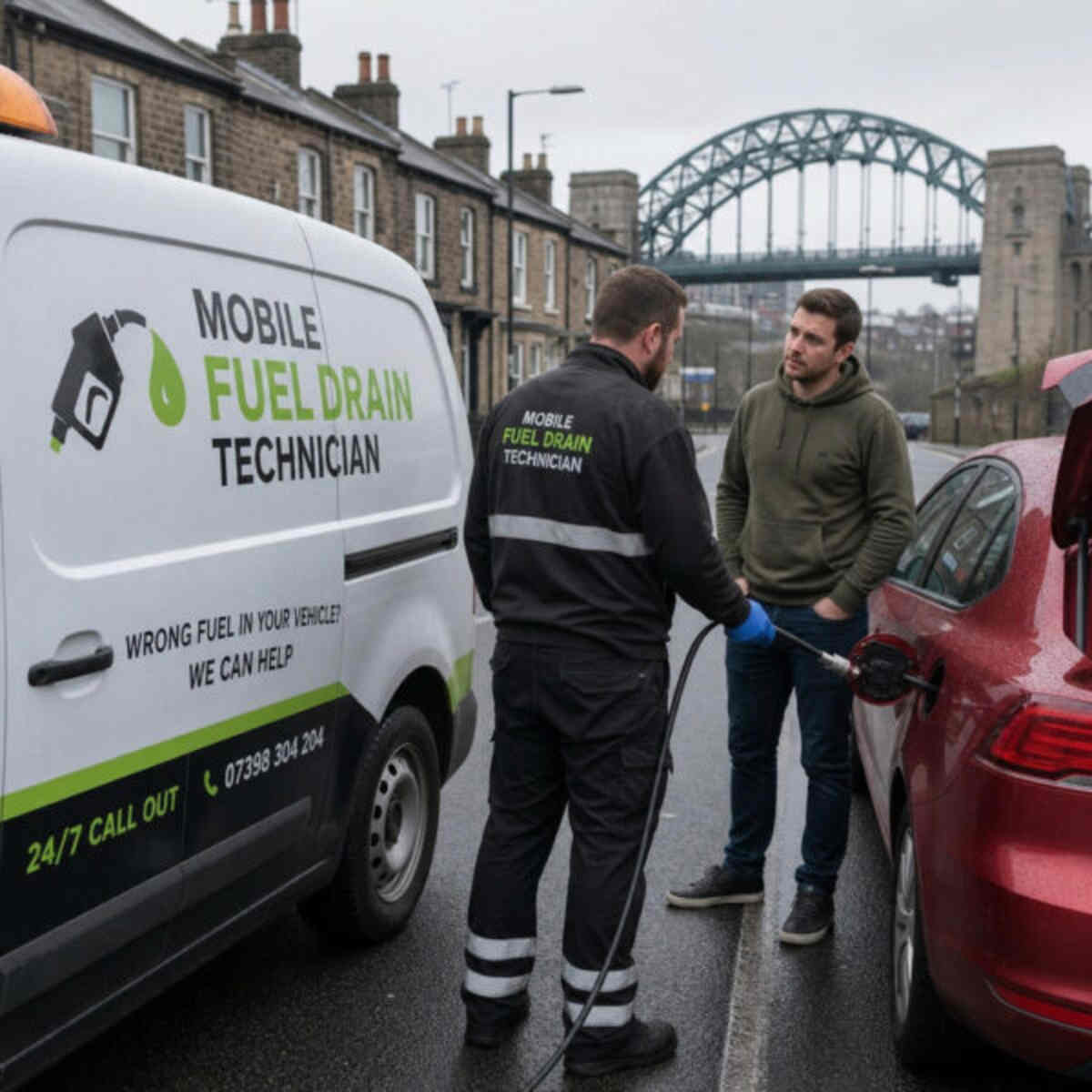
Put the wrong fuel in your vehicle? You’re not the first, and you won’t be the last. A busy forecourt, a moment of distraction, an unfamiliar vehicle, or a long day can be all it takes. The important thing is what you do next. What do you think about Fuel Drain Newcastle.
If you need a fuel drain service in Newcastle, the safest move is simple: do not start the engine if you can avoid it. If the engine has already been started, switch it off as soon as it is safe to do so. Then arrange professional help.
A mobile wrong-fuel technician can usually come to you, assess the situation, drain the contaminated fuel, flush the system where needed, and help you get moving again. Whether you are stuck at a petrol station, at work, outside your home, or on a roadside in or around Newcastle, the right support can save you time, reduce stress, and prevent potential damage.
Need a Fuel Drain in Newcastle? Start Here
Wrong fuel incidents are common, especially with modern vehicles and shared family or company cars. The most frequent situations include:
- Petrol put into a diesel vehicle
- Diesel put into a petrol vehicle
- AdBlue is put into a fuel tank
- Contaminated or stale fuel in the tank
- Mixed fuel after topping up with the wrong pump
- Fuel left in a vehicle that has been stored for a long time
The right solution depends on the vehicle, the type of fuel mistake, how much incorrect fuel was added, and whether the engine has been started.
If you are searching for fuel drain Newcastle support, you are probably looking for three things:
- A clear idea of cost
- A safe, professional process
- Fast help from someone who knows what they are doing
This page explains what affects the price, what a fuel tank drain usually includes, what to expect during the visit, and how to avoid making the problem worse.
What Does a Fuel Drain Service Usually Cost?
The cost of a fuel drain service in Newcastle can vary because no two wrong-fuel jobs are exactly the same. A straightforward drain at a petrol station is usually simpler than a vehicle that has been driven for miles after misfuelling. A small car with an accessible fuel system may be quicker to deal with than a larger van, commercial vehicle, or specialist model.
Rather than guessing, a reputable provider should give you a clear quote before attending. The quote should be based on the details of your situation, not a vague “we’ll see when we get there” answer.
A professional quote will usually consider:
- Your location in or around Newcastle
- The type of vehicle
- The fuel mistake involved
- How much wrong fuel has been added
- Whether the engine was started
- Whether the vehicle has been driven
- Access to the vehicle and fuel tank
- Time of day or out-of-hours callout needs
- Whether additional flushing or filter checks may be required
- Whether clean replacement fuel is needed to restart the vehicle
For many drivers, the key point is this: the earlier you stop, the more straightforward the job is likely to be. If you realise the mistake before turning the key, the service may simply involve draining the tank and safely preparing the system. If the vehicle has been driven, the technician may need to carry out additional checks and flushing to reduce the risk of ongoing problems.
Why Prices Vary for Fuel Drain Services
It is tempting to ask, “How much is a fuel tank drain?” and expect one fixed answer. In reality, price depends on the work required to make the vehicle safe to use again.
Here are the main factors that can influence the cost.
1. The Type of Wrong Fuel
Petrol in a diesel vehicle is one of the most common misfuel scenarios. It can be serious because diesel acts as a lubricant within parts of the fuel system, while petrol does not provide the same protection.
Diesel in a petrol vehicle can also cause problems, although the behaviour and symptoms are different. The vehicle may smoke, run poorly, fail to start, or cut out.
AdBlue in a fuel tank is a separate issue and should be treated carefully. AdBlue is not fuel, and it can cause serious contamination if it enters the fuel system. This type of job may require more careful handling than a simple petrol-and-diesel mix.
The more complex the contamination, the more time and care may be needed.
2. Whether the Engine Was Started
If you added the wrong fuel but did not start the engine, you are in the best possible position. The contaminated fuel may still be mostly contained in the tank.
If the engine was started, the wrong fuel may have moved through the lines, pump, injectors, or other parts of the fuel system. That does not automatically mean the vehicle is ruined, but it can mean the technician needs to do more than drain the tank.
If you have driven the vehicle, even for a short distance, tell the technician. Clear information helps them prepare the right equipment and gives better guidance.
3. How Much Wrong Fuel Was Added
A small amount of wrong fuel may be less complicated than a full tank of the wrong fuel. However, you should not rely on guesswork or old advice from forums. Modern fuel systems can be sensitive, and even a small amount of contamination may need professional attention.
The technician will usually ask:
- How much fuel was already in the tank?
- How much wrong fuel was added?
- Did you top it up with the correct fuel afterwards?
- Has the vehicle been started or driven?
These answers help determine how the fuel tank drain should be carried out.
4. Vehicle Make, Model, and Fuel System
Some vehicles are easier to access than others. Certain tanks, fuel lines, and underbody layouts make the job more straightforward. Others require extra care, specialist equipment, or more time.
The cost can also vary for:
- Cars
- Vans
- 4x4s
- Motorhomes
- Light commercial vehicles
- Fleet vehicles
- High-performance vehicles
- Vehicles with complex fuel system layouts
A good provider will not make promises based only on the word “car” or “van”. They will ask enough questions to understand what is involved.
5. Your Location in Newcastle
A mobile fuel drain technician comes to you, which is one of the biggest benefits of the service. Your exact location can affect response time and callout cost.
Common callout locations include:
- Petrol stations
- Supermarket forecourts
- Home driveways
- Work car parks
- Public car parks
- Roadside locations
- Commercial yards
- Fleet depots
If the vehicle is in a safe, accessible place, the job is often easier to complete. If it is in a busy or restricted area, the technician may need more time to work safely.
6. Time of Day
Misfuelling rarely happens at a convenient time. It can happen early in the morning, late at night, during a school run, on the way to work, or before a long journey.
Some providers may charge differently for evening, weekend, bank holiday, or emergency callouts. This should be explained clearly before you agree to the visit.
7. Extra Work Required
A basic drain may not be enough in every case. Depending on what happened, extra work may include:
- Flushing fuel lines
- Checking for visible contamination
- Inspecting filter condition
- Adding clean fuel
- Priming the system
- Testing the restart process
- Advising on next steps if the vehicle shows warning signs
The purpose is not to add unnecessary work. It is to help reduce the risk of starting the vehicle with contaminated fuel still in the system.
What Should Be Included in a Professional Fuel Drain Quote?
Before you book a fuel drain Newcastle service, ask what is included. A clear quote should help you understand the full scope of the service, not just the callout fee.
A professional service may include:
- Mobile callout to your location
- Initial situation assessment
- Safe draining of contaminated fuel
- Fuel tank drain using suitable equipment
- Flushing where appropriate
- Safe handling of removed fuel
- Basic system checks
- Clean fuel was added where needed and agreed upon
- Restart support when suitable
- Practical aftercare advice
You should also ask whether the quote changes if the vehicle has been driven, if access is difficult, or if additional work is required.
A trustworthy provider will be open about this. They will not pressure you into agreeing without explaining the likely cost and process.
Why a Mobile Fuel Drain Service Is Often Better Than Towing
Many drivers assume they need a recovery truck after putting the wrong fuel in. Sometimes recovery is necessary, especially if the vehicle cannot be safely worked on where it is. But in many cases of wrong fuel, a mobile fuel drain service can be more convenient.
A mobile technician can often attend the scene and complete the work without taking the vehicle to a garage. That means less disruption and less waiting around.
Benefits of mobile service include:
- Help at the petrol station, home, workplace, or roadside
- No need to arrange garage transport in many cases
- Faster return to your journey when the issue is straightforward
- Clear diagnosis of what happened
- Practical advice on whether it is safe to restart
- Less stress when you are stuck away from home
The key is to act quickly. If you are still at the pump, do not move the vehicle unless necessary for safety. If the forecourt staff ask you to move, explain that the car has been misfuelled and ask whether it can be pushed to a safe bay without starting the engine.
What to Do Immediately After Putting in the Wrong Fuel
A calm response can make a big difference. If you have just realised the mistake, follow these steps.
Step 1: Do Not Start the Engine
If you have not started the vehicle, keep it that way. Do not turn the ignition to “test it”. Do not try to dilute the wrong fuel by topping up with the correct fuel unless a professional specifically advises it.
Step 2: Put the Vehicle in a Safe Position
If you are at a petrol station, let the staff know. If possible, the vehicle may be pushed to a safer area without starting the engine. If you are on a road, prioritise safety and move away from traffic.
Step 3: Check What Fuel Was Added
Look at the receipt, pump number, or fuel grade if you are unsure. Try to estimate how much wrong fuel went in and how much fuel was already in the tank.
Step 4: Call a Fuel Drain Specialist
When you call, provide the most useful details:
- Your exact location
- Vehicle make and model
- Fuel type your vehicle should use
- Fuel type added by mistake
- Approximate amount added
- Whether the engine was started
- Whether the vehicle was driven
- Any warning lights, smoke, noises, or starting issues
Step 5: Wait for Advice Before Restarting
Even if the vehicle seems fine, do not assume it is safe. Wrong fuel can cause symptoms immediately or after the fuel circulates further through the system.
Our Typical Fuel Drain Process
A professional process should be methodical, safe, and easy for you to understand. Here is how a typical mobile wrong-fuel visit may work.
1. Phone Assessment
The process starts with a short set of questions. This helps establish the type of fuel error, the vehicle involved, and the likely level of contamination.
You should receive practical guidance right away, especially if you are still at the pump. The most important advice is usually not to start the vehicle and not to keep driving.
2. Clear Quote and Arrival Estimate
Once the basic details are known, you should receive a clear price guide or a fixed quote based on the information provided. If there are circumstances that could change the cost, those should be explained before attendance.
3. Safe Setup on Arrival
When the technician arrives, they will assess the location and vehicle. Safety matters, especially at petrol stations and roadsides. Equipment should be positioned carefully, and the work area should be managed to reduce risk.
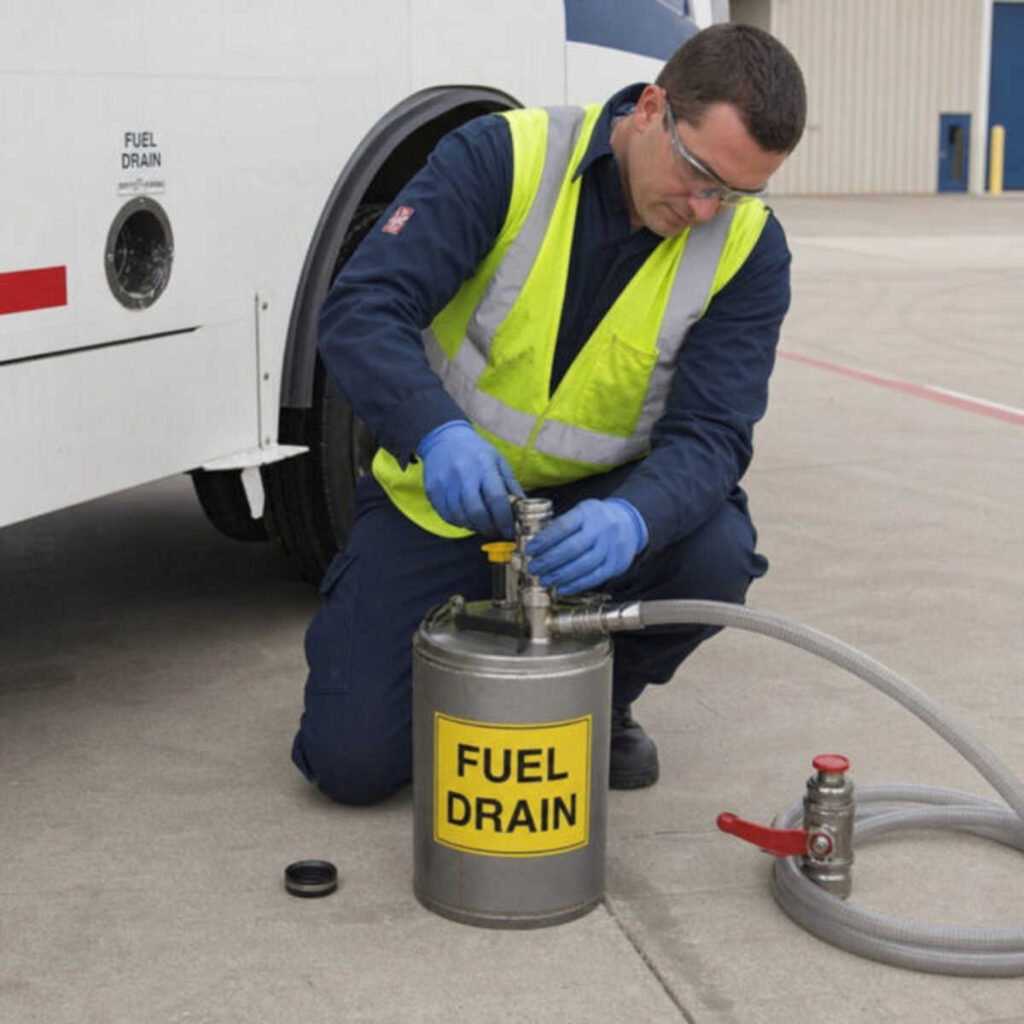
4. Fuel Tank Drain
The contaminated fuel is removed using suitable equipment. The exact method depends on the vehicle and access point. The goal is to remove the wrong fuel safely and efficiently without causing unnecessary disruption.
5. System Flush Where Needed
If the engine has been started or if contamination may have moved beyond the tank, the technician may flush parts of the fuel system. This helps reduce the risk of contaminated fuel remaining in lines or components.
6. Clean Fuel Added
Once the contaminated fuel has been removed and the system is prepared, clean fuel may be added. The amount required can depend on the vehicle and situation.
7. Restart and Checks
If appropriate, the technician may help restart the vehicle and check that it runs normally. If the vehicle shows unusual symptoms, you should be clearly advised on what to do next.
8. Aftercare Advice
Before leaving, the technician should explain any warning signs to watch for. These may include rough running, smoke, warning lights, difficulty starting, unusual noises, or loss of power.
Petrol in a Diesel Vehicle
Putting petrol into a diesel vehicle is one of the most common wrong-fuel incidents. It can happen because petrol nozzles often fit into diesel filler necks more easily than the reverse.
Diesel fuel helps lubricate parts of the diesel fuel system. Petrol can reduce that lubrication. This is why it is important not to start or drive the vehicle after the mistake.
Common signs may include:
- Difficulty starting
- Rough running
- Engine cutting out
- Knocking or unusual noise
- Loss of power
- Smoke from the exhaust
- Warning lights
If you notice the mistake before starting, call for help and wait. If you have already driven, stop safely and switch off. A professional can then assess whether a drain-and-flush may be sufficient or whether further mechanical inspection is needed.
Diesel in a Petrol Vehicle
Diesel in a petrol vehicle can also cause problems. Diesel is thicker and does not ignite in the same way as petrol in a petrol engine. The vehicle may fail to start, run poorly, smoke, or stall.
In some cases, the nozzle size may reduce the likelihood of this mistake, but it still happens. If it does, avoid starting the engine and arrange a proper fuel tank drain.
Do not keep turning the key to force the engine to run. This may move contaminated fuel further through the system.
AdBlue in the Fuel Tank
AdBlue is designed for a separate tank in vehicles with selective catalytic reduction systems. It should never be added to the fuel tank.
If AdBlue has gone into the fuel tank, do not start the engine. This type of contamination should be treated as urgent, as it is not merely a mix of two fuels. The tank may need careful draining, and the system may need additional attention.
When calling for help, be clear that AdBlue has been added to the fuel tank. This helps the technician prepare correctly and advise you on the safest next step.
Contaminated, Stale, or Water-Mixed Fuel
A fuel drain service is not only for wrong-fuel mistakes. It may also be needed when fuel has become contaminated or has been sitting in a tank for a long period.
Possible situations include:
- Vehicle stored for months
- Water suspected in the tank
- Poor-quality or contaminated fuel was added
- Fuel system problems after refuelling
- Agricultural, marine, or commercial equipment with stale fuel
- Vehicle bought second-hand with unknown fuel condition
Symptoms can include rough running, poor starting, smoke, reduced performance, or repeated stalling. A technician can advise whether draining the tank is a sensible first step.
Local Fuel Drain Support Across Newcastle
If you are in Newcastle and need help quickly, a mobile fuel drain service can come to many common locations. This may include central Newcastle, residential areas, business parks, supermarket forecourts, retail parks, and routes in and around the city.
Local support is useful because wrong-fuel incidents are time-sensitive. You may be blocking a pump, stuck before work, stranded with children in the car, or trying to keep a business vehicle on the road.
A local service should focus on:
- Prompt response where possible
- Clear communication
- Safe working practices
- Transparent pricing
- Practical vehicle advice
- No unnecessary panic
- No confusing jargon
When you call, give your postcode, the nearest landmark, or the name of the nearest petrol station. The more accurate your location, the easier it is to plan the response.
What Makes a Good Fuel Drain Provider?
Choosing the cheapest option is not always the safest choice. You are dealing with fuel, vehicle systems, and potentially hazardous materials. The provider should be competent, careful, and transparent.
Look for these trust signals.
Clear Pricing Before Attendance
You should understand the likely cost before agreeing to the job. If the provider cannot give a sensible explanation of the price, ask more questions.
Proper Equipment
Fuel draining should be carried out using appropriate tools, containers, pumps, and hoses, with safety measures in place. It should not feel improvised.
Experience With Wrong Fuel Cases
A technician who regularly handles misfuelling will know what questions to ask and what risks to look for. This matters when deciding whether the vehicle can be restarted after the drain.
Safe Handling of Contaminated Fuel
Removed fuel should be handled responsibly. Ask how contaminated fuel is managed if you are unsure.
Honest Advice
A good technician will not guarantee that every vehicle will be perfect afterwards. Most straightforward cases can be resolved efficiently, especially when the engine has not been started. But if the vehicle has been driven or shows symptoms, honest aftercare advice is important.
Professional Communication
You should feel informed, not rushed. A calm explanation is a strong sign that the provider knows the process.
Why Acting Quickly Can Save Money
When it comes to wrong fuel, time and engine use matter. The longer the vehicle runs on contaminated fuel, the greater the chance that contaminated fuel reaches sensitive components.
Acting quickly may help you avoid:
- More extensive flushing
- Garage recovery
- Diagnostic time
- Fuel filter replacement
- Fuel pump damage
- Injector problems
- Longer vehicle downtime
- Missed work or appointments
Of course, every vehicle is different. A fuel drain is not a magic guarantee against all damage, especially if the vehicle has already been driven. But stopping early gives you the best chance of a simpler repair path.
The Real Cost Is Not Just the Callout Fee
When comparing prices, think beyond the first number you are given. A cheap service that is unclear, poorly equipped, or incomplete can end up costing more if the vehicle still has contaminated fuel in the system.
A fair quote should reflect:
- The technician’s time
- Travel to your location
- Specialist fuel draining equipment
- Safe work practices
- Disposal or handling of contaminated fuel
- The complexity of the vehicle
- Any flushing needed
- Restart support and guidance
The best value is not always the lowest price. It is the service that resolves the issue safely, explains the process clearly, and helps you make the right decision for your vehicle.
Simple Cost Guidance Without the Guesswork
Here is a practical way to think about likely cost levels without relying on made-up figures.
A lower-complexity job is often one where:
- The wrong fuel was noticed immediately
- The engine was not started
- The vehicle is easy to access
- The fuel tank can be drained without complications
- No unusual warning signs are present
- The callout location is straightforward
A more complex job is often one where:
- The vehicle has been started
- The vehicle has been driven
- The tank is full or nearly full
- AdBlue or another contaminant is involved
- The vehicle is a van, a commercial vehicle, or a specialist model
- Access is restricted
- The job is out of hours
- The vehicle is showing symptoms
The most accurate answer is always a direct quote based on your situation. If you want quick guidance, have your vehicle registration, location, and fuel mistake details ready when you call.
Questions to Ask Before Booking
Before arranging a fuel drain, it is sensible to ask a few direct questions.
Try asking:
- What is included in the quoted price?
- Is the quote fixed based on the details I have provided?
- Are there any extra charges I should know about?
- Can you attend my location in Newcastle?
- What should I do while I wait?
- Should I avoid turning on the ignition?
- What happens to the contaminated fuel?
- Will you flush the system if needed?
- Can you help restart the vehicle after the drain?
- What if the vehicle has already been driven?
A professional should answer clearly and calmly.
What Not to Do After Misfuelling
Some advice sounds helpful but can make the problem worse. Avoid the following unless a qualified technician tells you otherwise.
Do Not Start the Vehicle “Just to See”
If the wrong fuel is still in the tank, starting the engine can move it through the fuel system.
Do Not Keep Driving
If you realise while driving, stop safely as soon as possible. Continuing may increase the chance of damage.
Do Not Top Up and Hope
Diluting wrong fuel with correct fuel is not reliable advice for modern vehicles. It may make the mixture harder to assess and still leave contamination in the system.
Do Not Try to Siphon Fuel Yourself
Fuel is hazardous, flammable, and difficult to handle safely. DIY draining can be dangerous and may damage the vehicle.
Do Not Ignore Warning Lights
If the vehicle shows warning lights, smoke, rough running, or loss of power, treat it seriously. Tell the technician exactly what happened.
Commercial and Fleet Fuel Drain Support
Wrong-fuel incidents can be especially disruptive for businesses. One van off the road can affect deliveries, site visits, staff schedules, and customer commitments.
A mobile fuel drain service can be helpful for:
- Tradespeople
- Delivery drivers
- Taxi and private hire drivers
- Small business fleets
- Company cars
- Construction vehicles
- Service vans
- Local organisations
For fleet vehicles, clear reporting and practical advice matter. If a driver has put in the wrong fuel, the goal is to minimise downtime and address the issue safely, without blame or confusion.
If you manage multiple vehicles in Newcastle, it may be useful to keep a trusted fuel drain contact available for emergencies.
Fuel Drain for Petrol Stations and Forecourts
Petrol stations are one of the most common callout locations. If you are stuck at a pump, staff may need the space cleared, and you may feel under pressure.
Stay calm. Explain that the vehicle has been filled with the wrong fuel and should not be started. Ask whether it can be pushed to a safe area. Many forecourt teams are familiar with this situation and would rather you avoid starting the engine if possible.
When you call for a technician, give:
- The petrol station name
- Full address or postcode
- Pump number if useful
- Your vehicle registration
- Your phone number
- Whether the vehicle is blocking access
This helps the technician find you quickly and plan the safest setup.
Fuel Drain at Home or Work
Not every wrong-fuel issue is noticed at the pump. Sometimes the vehicle is driven home and symptoms appear later. Sometimes a family member or employee realises the mistake after parking.
If the vehicle is at home or work, avoid starting it again. Even if it did make the journey, the fuel system may still contain contaminated fuel.
A mobile technician can assess the vehicle where it is parked, provided there is safe access. If the location is restricted, such as an underground car park or tight commercial site, mention this when booking.
Roadside Fuel Drain Help
If the vehicle has stopped on the road after misfuelling, safety comes first. Move away from traffic, use hazard lights where appropriate, and follow relevant roadside safety guidance.
A roadside fuel drain may be possible in some situations, but not all locations are safe for this type of work. If the vehicle is in a dangerous position, recovery to a safer location may be necessary before the fuel tank can be drained.
When calling, be honest about the vehicle’s location. A safe lay-by, car park, or quiet side road is very different from a live lane or fast-moving route.
How Long Does a Fuel Drain Take?
The time required depends on the vehicle and situation. A straightforward drain on a vehicle that has not been started is usually quicker than on one that has been driven, has a full tank, or needs extra flushing.
Factors that affect time include:
- Tank size
- Amount of fuel to remove
- Vehicle access
- Contamination type
- Whether the engine was started
- Whether clean fuel needs to be added
- Whether the vehicle restarts smoothly
- Safety conditions at the location
When you call, ask for an estimated attendance time and a rough idea of job duration. A professional should be able to give a sensible guide while explaining that exact timing depends on what they find on arrival.
Will a Fuel Drain Fix the Problem Completely?
In many straightforward cases, a fuel drain and flush can get the vehicle moving again. This is especially true when the wrong fuel is noticed before the engine is started.
However, no responsible provider should guarantee that no damage has occurred in every situation. If the engine has been run or the vehicle has been driven, there may be additional risk.
After the service, watch for:
- Warning lights
- Rough idle
- Poor acceleration
- Smoke
- Unusual engine noise
- Difficulty starting
- Stalling
- Fuel smell
If any of these continue, arrange further mechanical inspection. The fuel drain may still have been the right first step, but the vehicle may need additional checks.
Why Transparent Pricing Matters
When you are stranded, it is easy to feel rushed into a decision. Transparent pricing protects you from surprises.
A good provider should explain:
- What the callout includes
- Whether fuel disposal is included
- Whether replacement fuel is included or separate
- Whether flushing is included
- What could increase the price
- How payment works
- What happens if the vehicle has a more serious fault
You should not have to decode vague wording. The price conversation should be simple and direct.
How to Get the Fastest Quote
To get a fast and accurate quote for a fuel drain service, prepare the following information before calling:
- Your vehicle registration, make, and model
- Your exact Newcastle location
- The fuel your vehicle normally uses
- The wrong fuel was added
- How much was added
- How much fuel was already in the tank
- Whether you started the engine
- Whether you drove the vehicle
- Any symptoms or warning lights
- Whether the vehicle is in a safe place
If you do not know every answer, that is fine. Give the best information you can.
Local, Calm, and Practical Help When You Need It
A wrong-fuel mistake can feel embarrassing, but technicians deal with it regularly. You do not need a lecture. You need clear guidance and a safe fix.
The right service should make the next steps easy:
- Tell you what to do immediately
- Confirm whether the vehicle should stay switched off
- Give a clear price guide
- Attend your location where possible
- Drain the contaminated fuel safely
- Flush the system if required
- Help you understand whether it is safe to restart
- Explain any aftercare steps
That is what a good fuel drain Newcastle service should provide: practical help without drama.
Book a Fuel Drain Service in Newcastle
If you have put the wrong fuel in your car, van, or commercial vehicle, do not wait and hope it sorts itself out. The safest step is to get professional advice before starting or driving.
Call now for:
- Clear cost guidance before attendance
- Mobile support in and around Newcastle
- Help with petrol in diesel vehicles
- Help with diesel in petrol vehicles
- Fuel tank drain and system flushing were needed
- Straightforward advice from a trained technician
- Emergency support when available
The sooner you act, the better your chances of keeping the job simple.
Need help now? Call for a fast quote and tell us where you are in Newcastle.
Frequently Asked Questions
How much does a fuel drain service cost in Newcastle?
The cost depends on your vehicle, location, the type of wrong fuel, how much fuel is in the tank, and whether the engine has been started or driven. A straightforward case is usually less involved than a vehicle that has been driven with contaminated fuel. For the clearest answer, request a quote based on your exact situation before booking.
Can you give a fixed price before coming out?
In many cases, a provider can give a clear quote once they know the key details. These include your vehicle type, where you are, what fuel was added, how much was added, and whether the engine has been started. If anything could change the price, that should be explained before you agree.
What should I do if I put petrol in a diesel car?
Do not start the engine if you can avoid it. If you have already started or driven the vehicle, stop safely and switch it off. Call a fuel drain specialist and explain exactly what happened. Petrol in a diesel vehicle should be handled carefully, as it can compromise fuel system lubrication.
What should I do if I put diesel in a petrol car?
Avoid starting the engine and arrange a professional fuel tank drain. If the vehicle has already been started, stop using it and get advice. Diesel in a petrol vehicle can cause poor running, smoke, starting issues, or stalling.
Is AdBlue in the fuel tank a serious issue?
Yes. AdBlue should not go into the fuel tank. If this happens, do not start the engine. Tell the technician that AdBlue is involved so they can advise on the correct process and attend with suitable preparation.
Can I drive after putting the wrong fuel in?
It is not recommended. Driving can move the wrong fuel through the system and may increase the risk of damage. If you realise the mistake while still at the pump, keep the engine off. If you realise while driving, stop safely as soon as possible.
Can I just top up with the correct fuel?
Do not rely on topping up to dilute the wrong fuel. Modern vehicles can be sensitive to contamination, and dilution may not remove the risk. It is safer to speak with a professional before doing anything else.
How long does a fuel tank drain take?
The time depends on the vehicle, tank size, fuel volume, access, and whether the system needs flushing. A simple drain is usually quicker than a vehicle that has been driven or filled with a large amount of wrong fuel. Ask for a time estimate when booking.
Will my insurance cover damage from wrong fuel?
Insurance policies vary. Some policies may include misfuelling support, while others may not. Check your policy documents or contact your insurer. If you need immediate help, you can still arrange a fuel drain and discuss cover with your insurer separately.
Do I need a garage or a mobile fuel drain service?
Many wrong-fuel cases can be handled by a mobile technician at your location, especially if the vehicle has not been started. If the vehicle is in an unsafe location or shows serious symptoms, recovery or a garage inspection may be needed. A technician can advise based on the situation.
What happens to the contaminated fuel?
Contaminated fuel should be handled responsibly using suitable equipment and containers. Ask the provider how removed fuel is managed if you want more detail. It should not be poured away or handled casually.
Can draining the fuel damage my car?
A professional fuel drain is designed to safely remove contaminated fuel. The greater risk usually comes from starting or driving the vehicle with the wrong fuel inside. Choose a provider with proper equipment and experience.
What if I have already driven the car?
Stop safely and switch off the engine. Tell the technician how far you drove and what symptoms you noticed. The vehicle may need a more thorough drain-and-flush. If there are warning lights, unusual noises, or running problems, further inspection may be recommended.
Do you help vans and commercial vehicles?
Fuel drain services can often support vans and light commercial vehicles, depending on access and vehicle type. When booking, provide the vehicle details and location so the technician can confirm whether they can help.
Can you attend a petrol station in Newcastle?
Mobile fuel drain support is commonly requested at petrol stations. Give the petrol station name, address or postcode, and whether the vehicle is blocking a pump. If possible, avoid starting the vehicle and ask staff whether it can be pushed to a safe space.
What information do you need when I call?
Have your location, vehicle make and model, correct fuel type, wrong fuel type, approximate amount added, and whether the engine was started. If you know the vehicle registration, have that ready too.
Is a fuel drain cheaper if I have not started the car?
It is often more straightforward if the engine has not been started, which can help keep the work simpler. However, the final cost still depends on your vehicle, location, fuel amount, and access.
Can you guarantee the vehicle will be fine afterwards?
If the wrong fuel was caught early, many vehicles can be returned to normal use after a proper drain and flush. If the vehicle has been driven or is showing symptoms, there may be additional risks. A responsible technician will explain what they find and advise on next steps.
Ready for a Quote?
If you need a fuel drain service in Newcastle, get advice before turning the key. Share the details, ask for a clear cost, and arrange for a technician to come to you.
Call now for a fuel tank drain quote in Newcastle and get calm, practical support when you need it most.
