



Tired of your game nights ending in another round of Uno? What if you could play a game that’s just as easy to learn but makes you feel like a savvy millionaire art collector outsmarting your friends? This is the unique appeal of the modern art card game, where clever bidding can feel more satisfying than laying down a Draw Four. To find more, check on qqdewa
Let’s be honest, though: the words “modern art” can be intimidating. You might picture a stuffy gallery and worry that you need an art degree just to understand the cards, let alone play. But the best-kept secret of this game is that knowing the difference between Picasso and a postcard won’t help you win.
In practice, the game has a single, simple goal: make the most money. Forget art critics and historical movements; this is an art-themed card game for adults where your bank account is the only thing that matters. You’re not trying to appreciate the art—you’re trying to buy it low and sell it high to your friends at the table.
This guide breaks down how to play the art auction game like a pro. We’ll cover the simple rules and core strategies for bidding smart, knowing when to sell, and turning a hand of seemingly random paintings into a fortune. You’ll have everything you need to turn your next game night into a high-stakes auction where you’re the one walking away with all the cash.
The Goal is Simple: End the Game with the Most Cash
Forget about trying to build the most prestigious or beautiful art collection. In this game, there’s only one thing that determines the winner: who has the most money when the final gavel falls. All the paintings, auctions, and clever plays are just a means to an end. Your score is your final cash total, making this a pure game of economic wit where the savviest investor comes out on top.
So what’s the point of all the fancy paintings? Think of them less like priceless artefacts and more like shares on the stock market. You want to buy art when the price is low and, by playing the right cards, help drive up an artist’s popularity to sell high. The paintings themselves are just vehicles for profit; their only purpose is to put more money in your pocket than you spent acquiring them.
Every decision you make, from which piece you put up for auction to how high you bid, is a calculated business move. You’ll constantly be asking yourself, “Can I make a profit on this?” This simple focus is what makes the game so tense and exciting. But to make smart investments, you first need to understand what you’re bidding on—the five key artists who act as the game’s “suits.”
What Are You Bidding On? The 5 Artists Are Your “Suits”
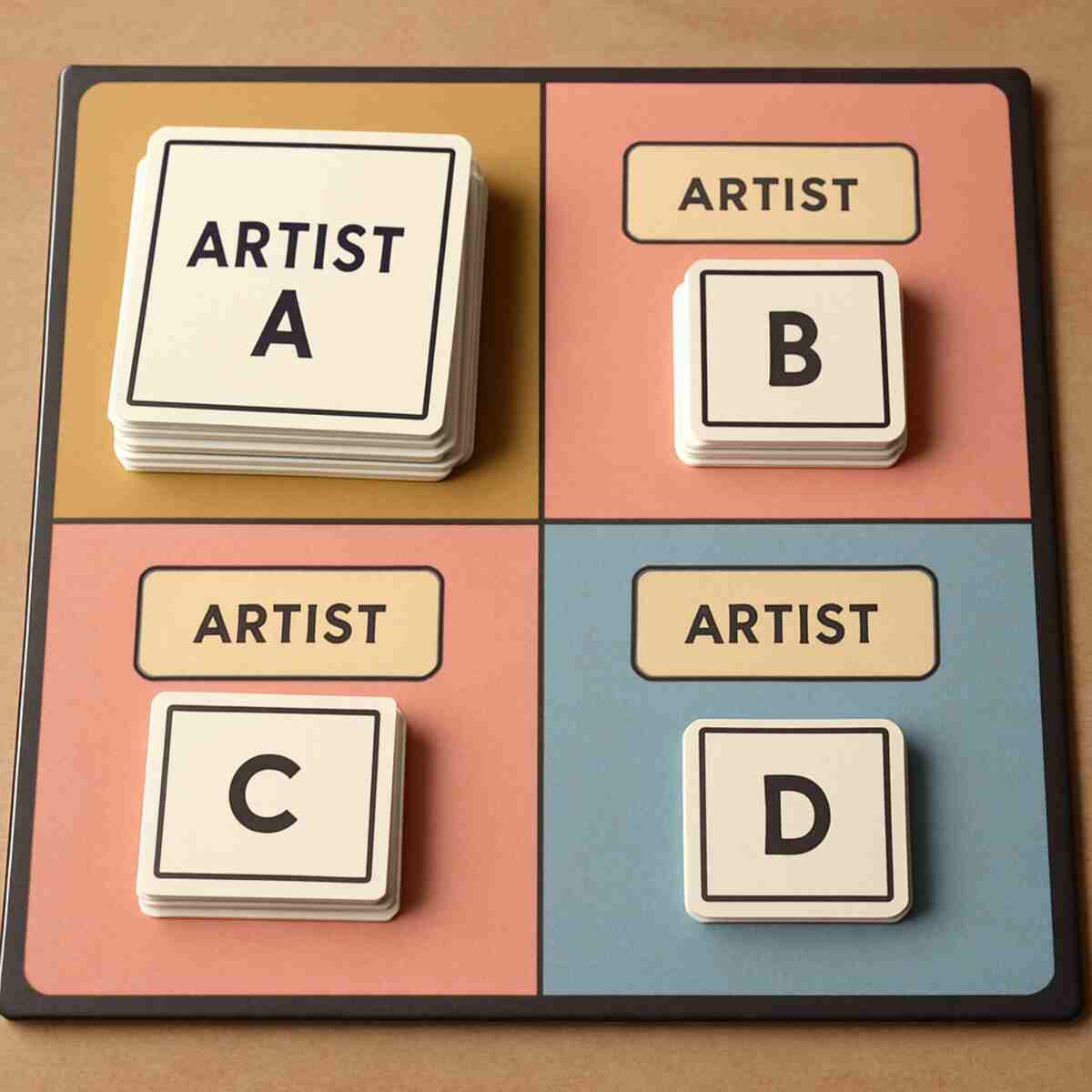
While this game is based on famous paintings, you don’t need to be an art historian to succeed. In fact, it’s much simpler to think of the five featured artists as the “suits” in a deck of cards. Each painting card belongs to one of five distinct artists, easily identified by a unique color and symbol on the card. Just as you’d group hearts or spades, your primary goal here is to group paintings by the same artist.
This is the core of the game: collecting sets. Think of it like collecting properties of the same color in Monopoly—one painting from an artist is a start, but owning three or four from the same person is where the real money is. The more paintings you collect from a single artist, the more valuable your set becomes at the end of the game. This simple idea, known in the gaming world as set collection, is your main path to victory.
But there’s a clever twist. The deck isn’t split evenly. Some artists have many paintings in the deck, making them easier to collect, while others are incredibly rare, with only a few cards available. This creates a fun strategic choice: do you pursue the common artist everyone is fighting over, or do you take a risk on the rare one, hoping to build a small but extremely valuable collection?
Ultimately, understanding which artists are common and which are rare is the secret to smart investing. This knowledge will guide every bid you make. Now that you know what you’re trying to acquire, let’s look at how you get them. The heart of the game beats in its four distinct types of auctions.
How Do Auctions Work? A Simple Guide to the 4 Bidding Types
Knowing which artist you want is one thing; winning their art is another. This is where the game’s clever bidding system comes into play. When a player puts a painting up for sale, the card itself tells you how you’ll bid on it. You don’t have to memorize a thing—just look at the symbol on the card to see which of the four auction types to use.
Think of it as four different ways to buy. Each auction type feels a little different, creating fun and strategic moments. Here’s a quick guide to how they work:
- Open Auction: This is the classic, fast-and-furious auction you’ve seen in movies. Everyone can bid freely, raising the price until all but one person has dropped out. The last bidder standing wins the art.
- Once-Around Auction: More orderly and tense. Starting from the player to the seller’s left, each person gets exactly one chance to make a single bid. You have to decide your best offer right then and there.
- Sealed Auction: In this “hidden” auction, everyone secretly decides their bid and reveals it at the same time. It’s a game of trying to guess what your opponents will do without overpaying.
- Fixed Price Auction: The simplest of all. The seller names their price for the painting. The first player to say “I’ll buy it!” gets the card. It’s a race to grab a good deal before someone else does.
Once you’ve played a round, you’ll instantly recognize these symbols and feel confident participating in any bidding war. Now that you know how to buy and sell art, let’s look at the two simple steps that make up every player’s turn.
Your Turn in 2 Simple Steps: Play a Card, Get Paid
On your turn, the entire game boils down to two quick actions. First, you choose one art card from your hand and place it on the table for everyone to see. This is the painting that will be sold. Second, you run the auction for it. The card you played will have a symbol telling you which of the four bidding types to use, so you’ll know exactly how to proceed.
Now for the best part: on your turn, you are the auctioneer. This means that while the other players are bidding against each other, you get to sit back and watch the money roll in. Whoever wins the auction pays their money directly to you. Think of yourself as the gallery owner for a moment. You’re not just trying to buy art; you’re a businessperson, selling paintings to the other collectors at the table to fund your own ambitions.
This mechanic creates a wonderfully simple strategic choice every turn. Should you put up a painting you secretly want, hoping no one else bids high? Or should you sell a piece you know an opponent desperately needs, just to make a quick profit from the bidding war? Playing the game well is all about balancing these two goals.
How Paintings Get Their Value: The Art Market Explained
So, you’ve bought a few paintings, but what are they actually worth? In this game, a painting’s value isn’t written on the card. Instead, value is created by an artist’s popularity, just like in the real art world. Think of each round as a season in the art market; the more an artist’s work is shown (played to the table), the hotter their market becomes. Your goal is to own paintings by the artists who are currently trending.
But when do you stop and see who’s trending? The round ends the moment any player plays the fifth painting by a single artist. This is a crucial move because it immediately triggers a scoring phase. As soon as that fifth card hits the table, all auctions stop, and it’s time to see which artists cut and which ones flopped. This means one player gets to decide the exact moment the market “closes.”
Once the round ends, you’ll rank the artists based on how many of their paintings were played. Only the top three most popular artists are worth any money! For example, the most-played artist’s paintings might be worth $30,000 each, the second-most $20,000, and the third $10,000. Any paintings you own by less popular artists are worth nothing for that round. Suddenly, that painting you bought for a bargain might be a masterpiece or just expensive wallpaper.
This creates a fascinating game of speculation. You’re constantly asking, “Is this artist about to become a star, or am I betting on a fad?” Timing is everything. Ending the round when an artist you’ve collected is ranked first is a huge power play. Knowing how and when to do this is a key skill for winning your first game.
First-Timer Strategy: How to Win by Creating an Artist Monopoly
Knowing when the market will close is one thing, but how do you make sure your paintings are the ones on top when it does? A great strategy for winning art bidding games, especially your first, is to create an “artist monopoly.” Instead of spreading your money across several artists, focus all your energy on collecting paintings from just one or two. This simplifies the game dramatically; you know exactly what to bid on and what to ignore, letting you build a powerful collection piece by piece.
This focus also changes how you should think about price. Sometimes, to secure your monopoly, you have to “overpay” for a painting—and that’s a smart move. Think of it as a strategic investment. If you already own two paintings by the “Surrealist” artist and a third one goes up for auction, paying a high price for it isn’t a mistake. That one purchase can lock in your artist’s popularity, ensuring your entire collection becomes valuable at the end of the round. It’s a classic “spend money to make money” scenario.
Once you’ve collected a few paintings from one artist, you gain a powerful advantage: control. If you hold the fourth and fifth paintings of that artist in your hand, you can single-handedly push them to the top and then play the final card to end the round on your terms. You’re no longer just a participant reacting to the market; you are actively making it.
The Auctioneer’s Secret: How to Profit From a Bidding War
When it’s your turn to be the auctioneer, you’re not just moving the game along; you’re running a business. Here’s one of the most important art auction game rules to learn: when you sell a painting, the money from the winning bid goes directly into your pocket. This single mechanic changes everything. Your goal as the seller isn’t just to get rid of a card, but to make as much cash as possible from the other players, funding your own future purchases.
So, what’s the best card to sell? It’s rarely a card you want to keep. A smart player pays close attention to what their opponents are collecting. If you see two players trying to build a monopoly on the “Pop Art” artist, and you happen to have a Pop Art card in your hand, that’s your golden ticket. Put that card up for auction and watch them fight over it. A bidding war between them is pure profit for you, giving you the cash to buy the art you actually want later on.
This brings up a critical point about protecting your monopoly strategy: avoid selling paintings by the artist you are trying to collect. It might seem like an easy way to earn some quick cash, but it’s a huge risk. Putting one of your artists’ paintings up for auction gives your opponents a chance to block your monopoly, start their own collection, or simply force you to buy it back at an inflated price. Holding onto those cards gives you control, while selling them can easily give your opponents the upper hand.
Special Cards and Common Questions Answered
While most of your auctions will be straightforward, some special cards change the game entirely. A key part of any good bidding card game tutorial is knowing when the rules bend. The most exciting of these is the “double auction” card, signaling a major opportunity for both the seller to make a fortune and for buyers to snag a valuable bundle.
Here are answers to a few common questions that arise:
- Q: What is a double auction? Instead of one painting, the auctioneer sells two by the same artist from their hand as a bundle. It’s a powerful way to complete a set quickly and a key part of learning “how do the different auction types work.”
- Q: What if I run out of money? You’re not out of the game! You simply can’t bid until it’s your turn to sell a painting and earn more cash. No one ever gets eliminated.
- Q: How long does the game take? The game is played over four distinct rounds. After each round, paintings are scored, which keeps the game moving and gives everyone a clear sense of who’s ahead.
Understanding these scenarios is what separates a casual player from a savvy collector. These clever Reiner Knizia auction game rules are designed to keep everyone engaged, ensuring that no single player can run away with the lead and no one is ever truly out of the running.
Is Modern Art the Right Game for Your Group?
Now that you know the rules, the biggest question is: will your friends actually enjoy it? This game shines with a group that loves a bit of friendly competition. Imagine everyone leaning over the table, shouting out bids, trying to bluff each other out of a prized painting. It’s lively, talkative, and sometimes a little loud. If your game nights thrive on high energy and direct player interaction, you’ve found a perfect match. This is what makes this particular art speculation game good for groups that enjoy a bustling, social atmosphere.
The experience is at its absolute best with four or five players, as this ensures every auction is competitive and interesting. A full game typically lasts between 45 and 60 minutes, hitting that sweet spot where it’s substantial enough to feel satisfying but quick enough to play a second round. It’s an ideal choice for a main event on game night without demanding the entire evening.
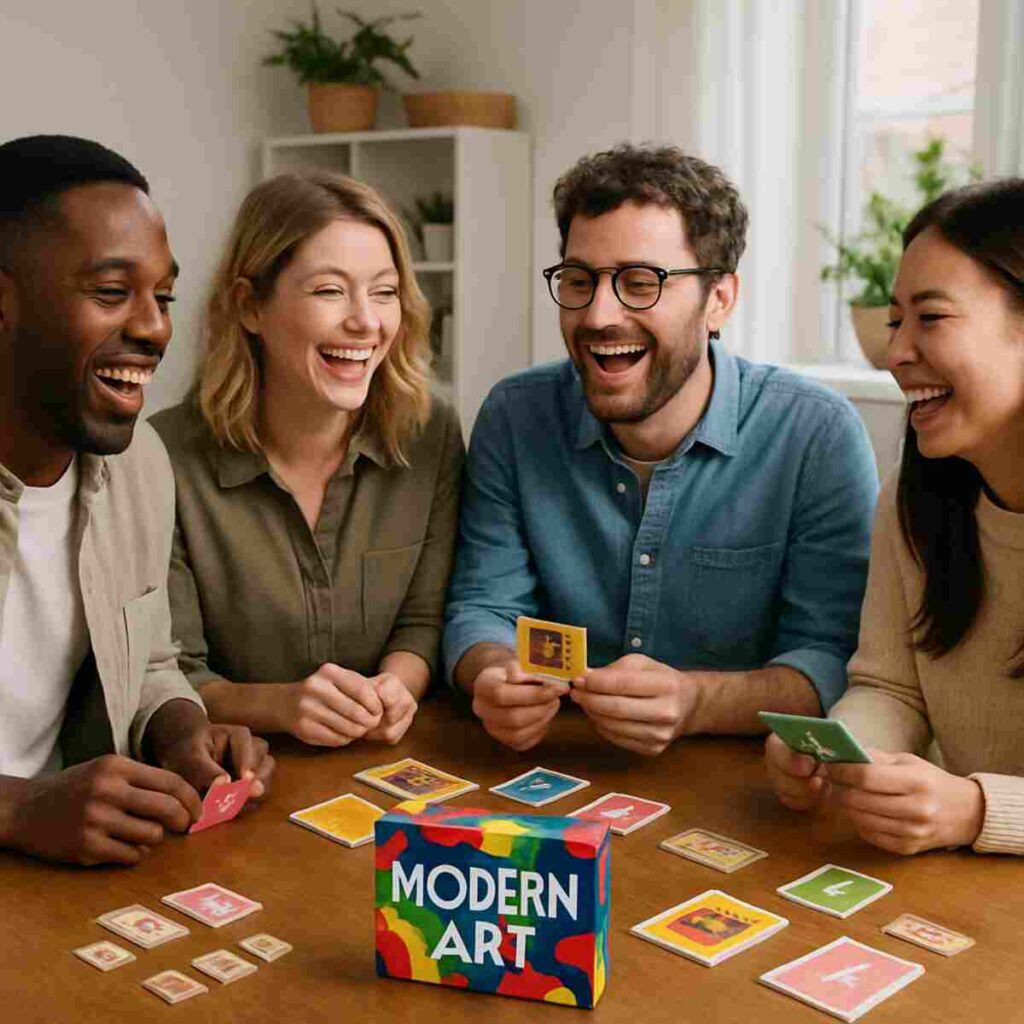
[Image: A diverse group of four friends are sitting around a wooden table, laughing. One player is holding up a game card towards the others, who are looking at it with amusement. The game box and colorful money tokens for Modern Art are clearly visible on the table.]
But what if your group prefers a quiet strategy over boisterous bidding? If the idea of an auction sounds too stressful, there are other fantastic art auction game alternatives. For a more peaceful and beautiful experience, a game like Canvas lets you layer transparent cards to create unique paintings. If you’re looking for other best board games for art lovers that focus on cooperation instead of competition, The Crew has players work together to complete missions, offering a totally different kind of challenge.
Ultimately, choosing the right game is about matching its personality to your group’s. If the thrill of a fast-paced auction and the satisfaction of outsmarting your friends sounds like a blast, then you are ready to become a collector.
Your First Move: Go From Novice to Notable Collector Tonight
You no longer have to wonder if a modern art card game is for you—you now have a clear playbook for your first win. What might have seemed like a confusing world of auctions and art styles is now a game you are fully equipped to navigate and even dominate, turning paintings into points and bidding wars into victory.
To feel confident in every move you make, just keep this simple three-point strategy for winning in mind:
- Create a Monopoly: Focus your collection on paintings from only one or two artists to maximize their value.
- Sell Smart: Put the art your opponents desperately need up for auction, not the art you’re trying to collect yourself.
- Control the Market: Watch which artists become popular and decide whether to join the trend or push your own artist to the top.
The art world can be intimidating, but in this game, you’re the savvy collector in control. You now have everything you need to not just play, but to compete from your very first turn. So grab your friends, open the box, and go make your first million.
